Skip to content
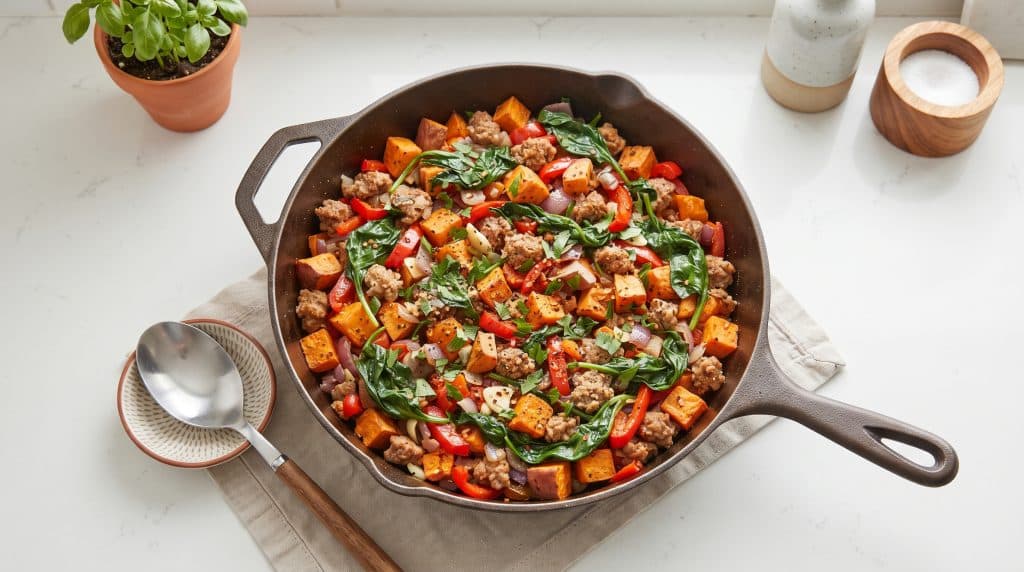
Sweet Potato & Sausage Skillet
A hearty one-pan dinner loaded with tender sweet potatoes, savory sausage, peppers, and onions. Quick, comforting, and packed with flavor!
Ingredients
1 lb (450 g) smoked sausage or Italian sausage, sliced
2 medium sweet potatoes, peeled and cut into small cubes
1 small onion, diced
1 red bell pepper, chopped
2 cloves garlic, minced
2 tbsp olive oil
1 tsp smoked paprika
½ tsp garlic powder
½ tsp dried thyme
½ tsp salt
¼ tsp black pepper
½ cup shredded cheddar cheese (optional)
2 tbsp fresh parsley, chopped
Instructions
Cook the sweet potatoes: Heat 1 tbsp olive oil in a large skillet over medium heat. Add the sweet potatoes, season with paprika, thyme, salt, and pepper, and cook for 8–10 minutes, stirring occasionally.
Add the vegetables: Add the onion and bell pepper. Cook for another 5–7 minutes until the vegetables begin to soften.
Brown the sausage: Push the vegetables to one side and add the remaining olive oil. Add the sliced sausage and cook for 5–7 minutes until browned.
Add garlic: Stir in the minced garlic and cook for about 30–60 seconds until fragrant.
Finish: Mix everything together and cook for another 2–3 minutes until the sweet potatoes are completely tender.
Add cheese: Sprinkle cheddar over the top, cover the skillet for 1–2 minutes, and let the cheese melt.
Garnish & serve: Sprinkle with fresh parsley and serve hot.
Prep & Cook Time
Prep: 10 minutes
Cook: 25 minutes
Total: 35 minutes
Servings: 4
Easy Variations
Add spinach or kale for extra vegetables.
Use chicken sausage for a lighter option.
Add a pinch of red pepper flakes for heat.
Top with a fried egg for a hearty breakfast-style meal.
Serve with a simple green salad for a complete dinner.

The Sweet Potato and Sausage Trend Taking Over Home Kitchens in 2026
Scroll through any food-focused corner of the internet right now and you’ll run into the same pairing again and again: sweet potato and sausage. It shows up in one-pan dinners, sheet-pan meals, air fryer recipes, meal prep, and high-protein comfort food roundups. What used to be a simple side-dish combination has turned into one of the most searched, saved, and remade dinner ideas of the year — and there are real reasons behind the surge.
This isn’t a random food fad. Sweet potato and sausage dishes sit at the exact intersection of what people are looking for in 2026: fast weeknight cooking, ingredients that stretch a grocery budget, naturally gluten-free options, and meals that feel indulgent without derailing health goals. Below, we’ll break down why this combination is dominating dinner tables, the best ways to cook it, the nutrition behind the hype, and the flavor trends worth trying next.
Why Sweet Potato and Sausage Dishes Are Everywhere Right Now
A few converging trends explain why this pairing keeps climbing search charts and social feeds.
One-pan and sheet-pan cooking has become the default request for busy home cooks. Nobody wants a sink full of dishes after a long day, and sweet potato and sausage recipes are almost always built around a single skillet, sheet pan, or air fryer basket. Everything cooks together, cleanup takes minutes, and the result still looks and tastes like a composed meal.
High-protein comfort food is another major driver. Comfort food used to mean heavy, carb-loaded dishes with little nutritional upside. Now, people want the same cozy, satisfying feeling from a meal that also supports fitness and health goals. Sausage brings protein and fat for satiety, while sweet potato adds slow-digesting carbohydrates and fiber — a combination that keeps people full longer without feeling like a diet compromise.
Meal prep culture has fully embraced this pairing too. Sweet potato and sausage dishes reheat beautifully, hold their texture in the fridge, and can be portioned into containers for the week. Search interest in “meal prep bowls,” “make-ahead dinners,” and “freezer-friendly meals” consistently overlaps with sweet potato sausage recipes, because the dish checks every box: it’s cheap, it’s filling, and it doesn’t get soggy or bland after a few days.
Budget-conscious cooking is also shaping what people put on their plates. With grocery costs still a common conversation, sweet potatoes and sausage are both affordable, shelf-stable-adjacent staples that go a long way. A single pound of sausage and a couple of sweet potatoes can feed a family of four, especially when bulked up with onions, peppers, or leafy greens.
Finally, gluten-free and low-carb-adjacent eating continues to trend, and this dish naturally fits without any substitutions. It works for keto-adjacent eaters (in smaller sweet potato portions), paleo followers, Whole30 participants, and anyone simply trying to eat “cleaner” without tracking every macro.

The Nutrition Behind the Hype
Part of what makes this combination so popular is that it isn’t just delicious — it’s genuinely nutrient-dense.
Sweet potatoes are loaded with beta-carotene, which the body converts into vitamin A, supporting eye health, immune function, and skin health. They’re also a strong source of fiber, which aids digestion and helps regulate blood sugar response, especially compared to white potatoes or refined carbohydrates. On top of that, sweet potatoes provide potassium, vitamin C, and a range of antioxidants that have made them a staple in “anti-inflammatory foods” and “gut health recipes” content.
Sausage contributes protein and fat, which slow digestion and increase satiety — a key reason this meal feels so satisfying despite being relatively simple. The protein content also supports muscle maintenance, which is why the dish frequently appears in fitness-focused meal plans alongside terms like “macro-friendly dinner” and “high-protein, low-effort meals.”
Of course, not all sausages are created equal nutritionally. Chicken and turkey sausage tend to be leaner, while pork sausage and chorizo bring more fat and richer flavor. Choosing a lower-sodium or nitrate-free sausage is an easy way to keep the dish aligned with cleaner-eating goals without sacrificing taste.
Choosing the Right Sausage for the Dish
One reason this recipe format has so much staying power is its flexibility with sausage type. Each variety shifts the flavor profile and opens up new recipe directions.
Andouille sausage brings smoky, spicy depth and is a favorite for Cajun-inspired sweet potato skillets. Kielbasa or smoked sausage is the most classic pairing — mild, smoky, and universally kid-friendly. Chicken or turkey sausage offers a leaner option without losing much flavor, especially when pre-seasoned with apple, maple, or Italian herbs. Chorizo adds bold, spiced richness that pairs beautifully w
ith the natural sweetness of the potato, especially in breakfast hash variations. Italian sausage (sweet or hot) works well when the dish leans toward a heartier, tomato-forward direction. And for plant-based eaters, meatless sausage links have improved dramatically in taste and texture, making a fully vegetarian version of this trend entirely possible.
Matching the sausage to the seasoning blend is where most of the recipe’s flavor trend variations come from — which brings us to the different ways people are actually cooking this dish right now.

The Most Popular Ways to Cook Sweet Potato and Sausage
The Classic Skillet. This is the version most home cooks reach for first: diced sweet potato and sliced sausage seared together in one pan with onion, garlic, and bell pepper. It’s fast, forgiving, and endlessly customizable with spice blends. This format dominates “easy weeknight dinner” and “30-minute meals” search trends.
The Sheet-Pan Roast. For a more hands-off approach, everything gets tossed in oil and seasoning, spread on a sheet pan, and roasted until caramelized. This method produces deeper flavor thanks to higher, drier heat, and it requires almost no active cooking time — ideal for anyone searching “hands-off dinner” or “dump and roast recipes.”
The Air Fryer Version. Air fryer recipes remain one of the fastest-growing categories in home cooking, and sweet potato and sausage adapt perfectly. Diced sweet potato and sausage cook in a fraction of the time it takes in an oven, with a crispier exterior than stovetop methods typically achieve. This variation shows up constantly under “air fryer dinner ideas” and “crispy sweet potato” searches.
The Breakfast Hash. Swap dinner seasoning for a lighter herb blend, top with a fried or poached egg, and you have one of the most popular brunch trends going: a savory, protein-packed hash that feels indulgent but is nutritionally balanced. This version overlaps heavily with “breakfast meal prep” and “high-protein breakfast” content.
The Soup or Stew Adaptation. Sweet potato and sausage also translate well into a heartier, cooler-weather format — simmered with broth, kale or spinach, and white beans for a one-pot soup. This taps directly into the ongoing demand for “cozy fall soups” and “one-pot dinners.”
Stuffed Sweet Potatoes. Instead of dicing the potato, some recipes roast it whole and stuff it with a sausage and vegetable mixture, topped with cheese or a drizzle of yogurt-based sauce. This format performs especially well on visual platforms, since the presentation is naturally photogenic — a major factor in what makes a recipe “trend” in the first place.
The Casserole Bake. For meal prep and potlucks, a baked casserole version layers diced sweet potato, sausage, and often eggs or cheese into a single dish that can be portioned for the week. This taps into “make-ahead breakfast casserole” and “meal prep casserole” search trends.
Flavor Combinations Driving the Trend Forward
Beyond the basic preparation, specific flavor directions are what keep this dish feeling fresh in recipe content.
Maple and smoked paprika brings out the natural sweetness of the potato while adding warmth — a combination especially popular in fall and holiday-adjacent content. Honey garlic creates a sticky, savory-sweet glaze that pairs particularly well with chicken sausage. Cajun and blackened seasoning leans into bold, smoky heat, especially with andouille sausage. Everything bagel seasoning has crossed over from bagels into roasted vegetable trends, adding a salty, garlicky crunch. Harvest spice blends — cinnamon, nutmeg, and a touch of cayenne — tap into the broader “fall flavors” wave that dominates search interest every September through November. And buffalo-style versions, tossed with hot sauce and butter, bring a spicier, tangier direction that’s grown popular for game-day and casual dinner content.

Tips for Getting the Best Results
A few technique details separate an average version of this dish from a genuinely great one.
Cut sweet potatoes evenly. Uneven pieces cook unevenly, leaving some chunks mushy and others undercooked. Aim for consistent half-inch cubes for the skillet or sheet-pan method.
Don’t overcrowd the pan. Sweet potatoes need direct contact with the hot surface to caramelize properly. An overcrowded skillet or sheet pan steams the potatoes instead of browning them, which is one of the most common reasons this dish turns out soft instead of crisp.
Sear the sausage first, then set it aside. Cooking the sausage separately and adding it back in at the end prevents it from overcooking while the potatoes finish, keeping the texture right on both.
Season in layers. Adding a light seasoning to the sausage, another to the vegetables, and a final touch before serving builds more complex flavor than dumping all the spices in at once.
color and nutrients intact instead of turning it into an overcooked afterthought.
Sweet potato and sausage dishes have earned their spot at the center of modern home cooking because they solve real problems: limited time, tight budgets, health-conscious goals, and the ongoing desire for food that still feels comforting. Whether it’s a five-ingredient skillet dinner, a hands-off sheet-pan roast, a crispy air fryer batch, or a stuffed sweet potato worth photographing, this pairing adapts to nearly every craving and cooking style.
As “high-protein comfort food,” “one-pan meals,” and “budget-friendly dinners” continue to dominate what people search for and cook, sweet potato and sausage recipes are positioned to stay a kitchen staple well beyond this season — not because they’re trendy for the sake of it, but because they genuinely deliver on flavor, nutrition, and convenience all at once.