

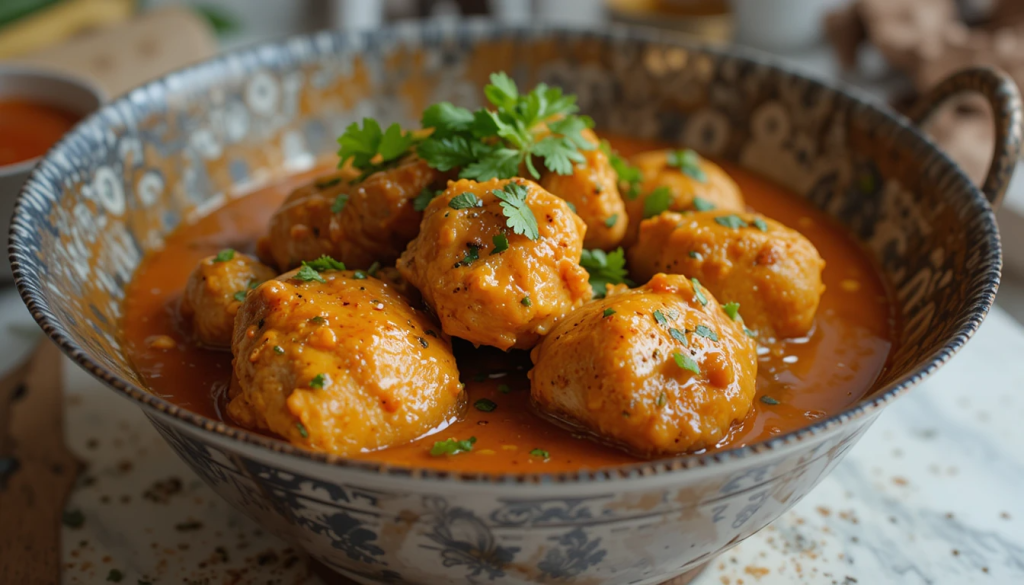
Creamy Chicken Korma Delight
Experience the rich, aromatic flavors of traditional Chicken Korma! Creamy, mildly spiced, and perfect for family dinners or special occasions.
Ingredients:
-
1.5 lbs (700 g) boneless chicken, cut into cubes
-
1 cup plain yogurt
-
1/2 cup heavy cream
-
2 large onions, finely sliced
-
3 cloves garlic, minced
-
1-inch piece ginger, grated
-
1/4 cup cashew nuts, soaked
-
3 tbsp vegetable oil or ghee
-
1 tsp cumin seeds
-
1 tsp coriander powder
-
1/2 tsp turmeric powder
-
1/2 tsp garam masala
-
1/4 tsp cardamom powder
-
Salt to taste
-
Fresh cilantro for garnish
Instructions:
-
Blend soaked cashew nuts with yogurt to make a smooth paste. (Duration: 5 minutes)
-
Heat oil or ghee in a large pan over medium heat. Add cumin seeds and let them sizzle. (Duration: 1 minute)
-
Add sliced onions and sauté until golden brown. (Duration: 10 minutes)
-
Stir in garlic and ginger, cooking until fragrant. (Duration: 2 minutes)
-
Add chicken cubes and sear until lightly browned on all sides. (Duration: 8 minutes)
-
Mix in coriander powder, turmeric, garam masala, cardamom, and salt. (Duration: 2 minutes)
-
Pour in the yogurt-cashew paste and simmer on low heat, stirring occasionally. (Duration: 15 minutes)
-
Add heavy cream and cook until the chicken is tender and the sauce is creamy. (Duration: 10 minutes)
-
Garnish with fresh cilantro and serve hot with naan or basmati rice.
Prep Time: 20 minutes | Cooking Time: 48 minutes | Total Time: 1 hour 8 minutes
Kcal: 380 kcal | Servings: 4-5 servings.
How to Make Chicken Korma at Home – Better Than Takeout
Are you tired of the same old takeout routine? Can you recreate your favorite Indian dish in the comfort of your own kitchen? Making chicken korma at home is easier than you think. It lets you customize the ingredients to your taste, avoiding preservatives found in restaurant versions.


By making korma at home, you can enjoy a rich, creamy, and authentic Indian cuisine experience. This traditional recipe is not only delicious but also easy to prepare. It’s perfect for a weeknight dinner.
Key Takeaways
- Learn how to make authentic chicken korma at home.
- Customize ingredients to suit your taste preferences.
- Avoid preservatives found in takeout versions.
- Enjoy a rich and creamy Indian cuisine experience.
- Easy preparation makes it perfect for weeknight dinners.
The Rich History and Origins of Chicken Korma
Chicken Korma is a key part of Indian cuisine. It comes from the Mughal Empire’s cooking traditions. This dish shows the area’s rich culture, with its mix of aromatic spices and soft chicken.

Mughal Influences on Indian Cuisine
The Mughal Empire greatly influenced Chicken Korma’s flavors and methods. It used aromatic spices like cardamom, cinnamon, and cloves. These spices add to the dish’s authentic flavors.
“The Mughal cuisine was a blend of Persian, Turkish, and Indian flavors, which ultimately gave birth to dishes like Chicken Korma.”
Evolution of Korma Through the Centuries
Chicken Korma has changed over time. It has taken on local ingredients and cooking ways. This change shows its deep history and the flexibility of Indian cuisine.
| Period | Influence on Korma |
|---|---|
| Mughal Era | Introduction of aromatic spices and rich sauces |
| Regional Adaptations | Incorporation of local ingredients and cooking techniques |
What Is Chicken Korma? Understanding This Classic Dish
Chicken Korma is a beloved dish from Indian cuisine. It has a long history that spans centuries and regions. Known for its creamy texture, it’s loved all over the world. But what makes it authentic, and how does it differ in various regions?
Defining Characteristics of Authentic Chicken Korma
Authentic Chicken Korma has a mild flavor and a creamy texture. It’s made with marinated chicken, yogurt, nuts, and spices. The secret to a true Korma is its balanced flavors, without the intense heat of other curries. The sauce is rich and creamy, often made with nuts or seeds.

A traditional Chicken Korma recipe uses spices like cumin, coriander, and cardamom. These spices give it a unique aroma. Cardamom and cinnamon add warmth without heat, making the dish mild.
| Ingredient | Role in Korma | Common Variations |
|---|---|---|
| Chicken | Main protein | Breast or thigh, boneless or bone-in |
| Yogurt | Marinade base | Plain yogurt or mixed with cream |
| Nuts/Seeds | Thickening agent and flavor | Almonds, cashews, or poppy seeds |
| Spices | Flavor profile | Cumin, coriander, cardamom, cinnamon |
Regional Variations Across India
Chicken Korma changes a lot across India. In the north, it’s richer and creamier. In the south, it might have coconut and local spices, giving it a unique taste. Regional differences also show in spice levels, with some being milder and others spicier.
The variety in Korma recipes shows how adaptable this dish is. Whether it’s coconut milk in the south or specific nuts in the north, each region puts its own spin on Chicken Korma.
Essential Ingredients for Perfect Chicken Korma
To make authentic Chicken Korma, you’ll need aromatic spices, tender chicken, and a creamy base. This dish is known for its mild and rich flavor. The quality of its ingredients is key to its success.
The Protein: Selecting and Preparing Your Chicken
For Chicken Korma, use boneless, skinless chicken breast or thighs. Choose based on whether you prefer leaner meat or richer flavor. Marinating the chicken in yogurt and spices tenderizes it and adds flavor.
The Aromatics: Onions, Garlic, and Ginger
Onions, garlic, and ginger are the base of Chicken Korma. Sauteing them until soft and fragrant is crucial. Use yellow onions and shallots for a sweeter taste.
The Spice Blend: Creating Your Korma Masala
The spice blend, or Korma Masala, gives Chicken Korma its unique flavor. Essential spices include cumin, coriander, cinnamon, and cardamom.
Essential Spices for Authentic Flavor
Cumin and coriander add warmth. Cinnamon and cardamom bring a sweet and aromatic note.
Grinding vs. Store-Bought Options
Grinding your spices gives the freshest flavor. But, a good quality store-bought curry powder is a convenient alternative.
| Spice | Role in Korma |
|---|---|
| Cumin | Provides warmth |
| Coriander | Adds depth |
| Cinnamon & Cardamom | Contribute sweetness and aroma |
The Creamy Base: Yogurt, Cream, and Nuts
The creamy base is what makes Chicken Korma a yogurt-based mild curry. Yogurt and cream blend to create a rich sauce. Ground nuts or cashews enhance texture and flavor.
By focusing on these key ingredients and following some simple cooking tips, you can make a delicious Chicken Korma at home.

Chicken Korma vs. Other Popular Indian Curries
Chicken korma is a standout in the world of Indian curries. But how does it compare to butter chicken and tikka masala? Knowing these differences helps you explore the rich world of Indian cuisine and make better choices when cooking or ordering.
Chicken Korma vs. Butter Chicken: Key Differences
The main difference between chicken korma and butter chicken is their sauce and spice. Butter chicken has a rich, creamy tomato sauce and a moderate spice level. Korma, on the other hand, has a mild, creamy sauce made with yogurt or nuts. This makes korma a great option for those who like milder flavors.
Chicken Korma vs. Tikka Masala: Flavor Profiles Compared
Chicken korma and tikka masala are both beloved Indian dishes, but they taste quite different. Tikka masala has a bold, tangy flavor and a moderate spice level, with a tomato-based sauce. Korma, however, is milder and creamier, with a sauce often enriched with nuts or yogurt.
Where Korma Fits in the Spectrum of Indian Curries
Indian curries range from very mild to extremely hot. Chicken korma is on the milder side, making it perfect for those who prefer mild curry or are new to Indian cuisine. Here’s a quick comparison of korma with other popular curries:
| Curry Type | Spice Level | Sauce Base |
|---|---|---|
| Chicken Korma | Mild | Creamy (yogurt/nuts) |
| Butter Chicken | Moderate | Tomato-based |
| Tikka Masala | Moderate | Tomato-based |
Equipment and Preparation for Cooking Chicken Korma
Having the right tools and being prepared is key to cooking Chicken Korma well. It makes the cooking process easier and less stressful. You’ll need the right kitchen tools and a plan to get everything ready.
Essential Kitchen Tools
You’ll need a few important tools to cook Chicken Korma. A large pan or Dutch oven is great for the sauce. A blender or food processor is needed for grinding spices. And, a bowl is essential for marinating the chicken. Good-quality tools make cooking better.
Prep Work to Streamline Your Cooking Process
Preparation is crucial for delicious Chicken Korma. Begin by chopping onions, garlic, and ginger. Also, measure out your spices. Having everything ready makes cooking smoother and more fun.
Ingredient Preparation Checklist
- Chop onions, garlic, and ginger
- Measure out spices (cumin, coriander, turmeric, etc.)
- Prepare yogurt and cream for the sauce
- Cut chicken into bite-sized pieces
Time-Saving Tips
To save time, prepare your spice blend and marinate the chicken early. You can also chop aromatics a day before and keep them in the fridge. These steps help you make homemade Chicken Korma in under 30 minutes.
Step-by-Step Chicken Korma Recipe
The secret to great chicken korma is in its preparation. To make this delicious dish, follow a few key steps. These include marinating the chicken and adding the final garnishes.
Marinating the Chicken for Maximum Flavor
Begin by marinating your chicken. Mix plain yogurt, garlic, ginger, and spices like cumin, coriander, and cayenne pepper. Coat the chicken evenly and marinate for at least 30 minutes. Longer is even better for flavor.
Creating the Aromatic Base
Next, make the aromatic base. Sauté onions, garlic, and ginger in oil until soft and fragrant. This step is key for deep flavor in your korma.
Developing the Sauce
To make the sauce, add spices like korma masala and tomato puree or fresh tomatoes. Add heavy cream or a non-dairy alternative for creaminess.
Combining and Simmering to Perfection
Combine the marinated chicken with the sauce. Simmer until the chicken is cooked and the sauce thickens. This step ensures flavors blend and chicken is tender.
Final Touches and Garnishes
Finally, garnish with fresh cilantro or scallions. Add a sprinkle of cardamom or a dollop of raita for extra flavor. These touches make your chicken korma stand out.
By following these steps, you’ll make a creamy curry that will wow everyone. Serve it with basmati rice or naan bread for a true taste of authenticity.
The Secret to Achieving Restaurant-Quality Chicken Korma at Home
The secret to a great Chicken Korma is all about the spices, texture, and details. To get authentic flavors, you need to know how these elements come together.
Balancing Spices for Authentic Flavor
Balancing spices is an art that takes patience and practice. Begin with cumin, coriander, and cinnamon. Then, adjust to your liking. The goal is to blend the spices harmoniously, not to let one flavor dominate.
Texture Techniques: Creating the Perfect Creamy Consistency
A creamy curry is key to a great Chicken Korma. Use yogurt and cream for this. Yogurt tenderizes the chicken, and cream makes the sauce rich and smooth. Make sure to blend the sauce well to avoid lumps.
Common Mistakes to Avoid
Even skilled cooks can slip up when making Chicken Korma. Two big mistakes are temperature control issues and ingredient substitution pitfalls.
Temperature Control Issues
Keeping the right temperature is crucial. High heat can curdle the sauce or overcook the chicken. Keep the heat low to ensure the sauce thickens right and the chicken cooks evenly.
Ingredient Substitution Pitfalls
Swapping ingredients can change your Chicken Korma’s taste. For instance, low-fat yogurt can alter the sauce’s texture. Be careful with these swaps to keep the dish true to its roots.
By following these cooking tips and focusing on the details, you’ll make the best Indian Chicken Korma you’ve ever had.
Customizing Your Chicken Korma
Chicken Korma is a blank canvas for your personal touch. It can be made to fit many tastes and diets. This makes it perfect for cooks of all kinds.
Adjusting Spice Levels: From Mild to Hot
To change your Chicken Korma’s spice, it’s easy. For a mild curry, cut down or skip the green chilies and hot spices. If you like it hotter, add more chili peppers or a bit of hot sauce.
Dietary Adaptations: Dairy-Free and Vegan Options
Want a yogurt-based sauce but no dairy? Try coconut yogurt or almond yogurt instead. For a vegan dish, swap chicken with tofu or tempeh. Use plant-based cream or coconut cream instead of heavy cream.
Adding Vegetables for a Complete Meal
Make your Chicken Korma better by adding veggies like bell peppers, carrots, or potatoes. They add texture, flavor, and make the dish more nutritious. It becomes a full meal.
Perfect Pairings: What to Serve with Chicken Korma
Chicken korma is a great base for an Indian feast. It’s all about finding the right sides to match its creamy texture. Look for flavors and textures that contrast well.
Traditional Rice Accompaniments
Basmati rice is a top choice for chicken korma. Its soft texture and light taste enhance the dish. Try jeera rice or pilaf for a twist.
Bread Options: Beyond Naan
Naan is popular, but other breads like roti, paratha, or garlic naan offer new tastes. Paratha is especially good with korma’s creamy sauce.
Side Dishes to Complete Your Indian Feast
Finish your meal with sides like raita (yogurt-based), papadum, or a fresh salad. They add variety and balance the korma’s richness.
Make-Ahead Tips and Storage Recommendations
Enjoy homemade chicken korma any night with a few make-ahead tips. This Indian dish can be made ahead, stored, and reheated. It keeps its rich flavor and creamy texture.
Preparing Components in Advance
Start by marinating the chicken a day before. This lets the flavors soak into the meat. Also, make the spice blend ahead and store it in a sealed container for up to a week.
Proper Storage and Reheating Methods
After cooking, store chicken korma in the fridge for 3 days. To reheat, warm it gently over low heat. Add water or cream if it’s too thick. Always reheat to 165°F (74°C) for safety.
Freezing Guidelines for Batch Cooking
Chicken korma freezes well for 3 months. Cool it completely, then put it in an airtight container or freezer bag. Thaw it in the fridge overnight before reheating.
Troubleshooting Your Chicken Korma
Even with careful preparation, Chicken Korma can sometimes go awry, but don’t worry, we’ve got you covered. This section will help you identify and fix common issues that may arise when cooking this popular dish.
Fixing a Broken or Curdled Sauce
A broken or curdled sauce can ruin the texture of your Chicken Korma. To fix this, try whisking in a little more yogurt or cream. If that doesn’t work, you can strain the sauce through a fine-mesh sieve to remove the curdled bits and then reheat it gently.
- Whisk in additional yogurt or cream
- Strain the sauce through a fine-mesh sieve
- Reheat gently to prevent further curdling
Adjusting Thickness and Consistency
The ideal consistency for Chicken Korma is creamy but not too thick. If your sauce is too thin, you can simmer it for a few more minutes to reduce the liquid. Conversely, if it’s too thick, you can thin it out with a little water or chicken broth.
- Simmer to reduce excess liquid
- Add water or chicken broth to thin the sauce
Rescuing Over-Spiced or Under-Flavored Korma
If your Chicken Korma is too spicy, you can balance the heat by adding a dairy product like yogurt or cream. If it’s under-flavored, try adding a pinch of salt or a sprinkle of your Korma masala spice blend.
By following these troubleshooting tips, you can rescue your Chicken Korma and enjoy a delicious, creamy curry. Remember, practice makes perfect, so don’t be discouraged if it takes a few attempts to get it just right.
Conclusion: Mastering the Art of Homemade Chicken Korma
Now you know how to make delicious chicken korma, just like your favorite Indian restaurant. You’ve learned about its rich history and the authentic flavors that make it special.
Making chicken korma at home is simpler than you thought. Choose the right ingredients, prepare ahead, and balance your spices. This way, you’ll get a creamy sauce that will wow everyone. Feel free to try new things, like changing spice levels or adding your favorite veggies.
Indian cuisine is vast and exciting, and mastering chicken korma is just the start. With this recipe, you’re ready to try more dishes and improve your cooking. So, start cooking and enjoy the delicious flavors of homemade chicken korma.
FAQ
What is chicken korma?
Chicken korma is a beloved Indian dish. It’s known for its creamy taste and mild spices. The dish features marinated chicken cooked in a rich sauce with aromatic spices.
Is chicken korma spicy?
Chicken korma is usually a mild curry. It’s perfect for those who don’t like spicy food. But, you can adjust the spice to your liking.
What are the key ingredients in chicken korma?
Chicken, yogurt, and cream or nuts are key. Onions, garlic, ginger, and spices like cumin and coriander are also important.
Can I make chicken korma dairy-free or vegan?
Yes, you can make chicken korma without dairy. Use non-dairy yogurt and cream. Adjust the spices as needed.
How do I achieve the perfect creamy consistency in chicken korma?
For creaminess, mix yogurt and cream or nuts. Simmer the sauce gently. Don’t boil it, as it might curdle.
Can I make chicken korma ahead of time?
Yes, you can prep parts like marinating chicken and making spice blends ahead. You can also refrigerate or freeze it for later.
What are common mistakes to avoid when making chicken korma?
Avoid overcooking chicken and not balancing spices. Also, simmer the sauce gently to prevent it from breaking or curdling.
What can I serve with chicken korma?
Serve it with basmati rice, naan bread, and side dishes like raita or sautéed veggies.
Link source:
-
Anchor Text: Indian Spices Guide
URL: https://en.wikipedia.org/wiki/List_of_Indian_spices
Why: Helps readers understand spices used in korma without competing for “chicken korma.” -
Anchor Text: How to Cook Basmati Rice Perfectly
URL: https://en.wikipedia.org/wiki/Basmati
Why: Basmati rice is often served with korma; guides readers on pairing. -
Anchor Text: Tips for Creamy Curries
URL: https://en.wikipedia.org/wiki/Curry
Why: Offers advice to enhance creaminess in dishes like korma.